Studies in modern warehousing suggest that picking activities can account for up to 50–60% of total operational costs — and a significant portion of that time is spent simply locating stock.
In an environment where every second counts, something as simple as a missing, unclear, or poorly applied label can quietly erode efficiency across an entire operation.
Yet despite its impact, warehouse labelling remains one of the most underestimated elements of supply chain performance.
Across many distribution centres, labelling systems are quietly failing. Labels peel, barcodes become unreadable, and location identification becomes inconsistent. While these issues may appear minor on the surface, their impact is anything but. They contribute to picking errors, delays, inefficiencies, and growing frustration on the warehouse floor.
According to insights from MHI, improving inventory accuracy and operational efficiency remains a key focus for logistics operators globally. However, without a structured and reliable labelling system in place, these goals are difficult to achieve.
One of the most common misconceptions is that label failure is a product issue. In reality, it is far more often a process issue.
“Most labelling failures don’t come down to the label itself,” explains Iain Sherwood, Managing Director of ProMHS. “They come down to how the system is designed, specified, and applied within the warehouse environment.”
Factors such as surface preparation, environmental conditions, material selection, and application technique all play a role in how well a label performs over time. Even something as simple as applying a label to a dusty surface or failing to apply sufficient pressure can compromise adhesion and lead to early failure. In high-volume environments, these small oversights can quickly escalate into significant operational inefficiencies.
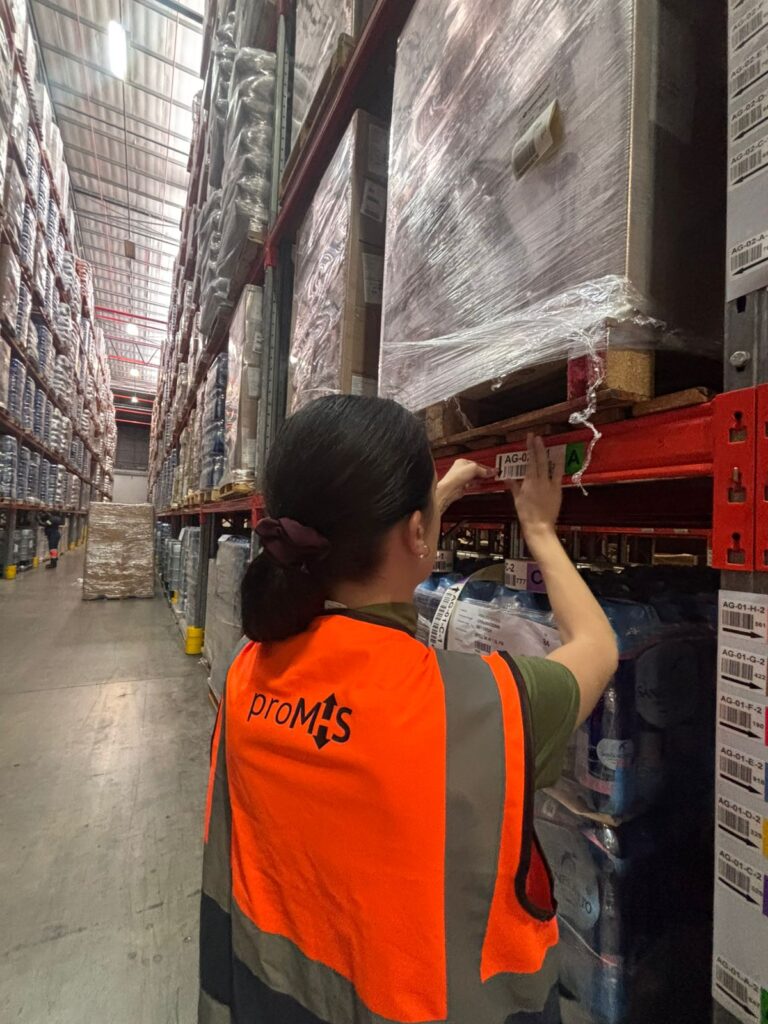
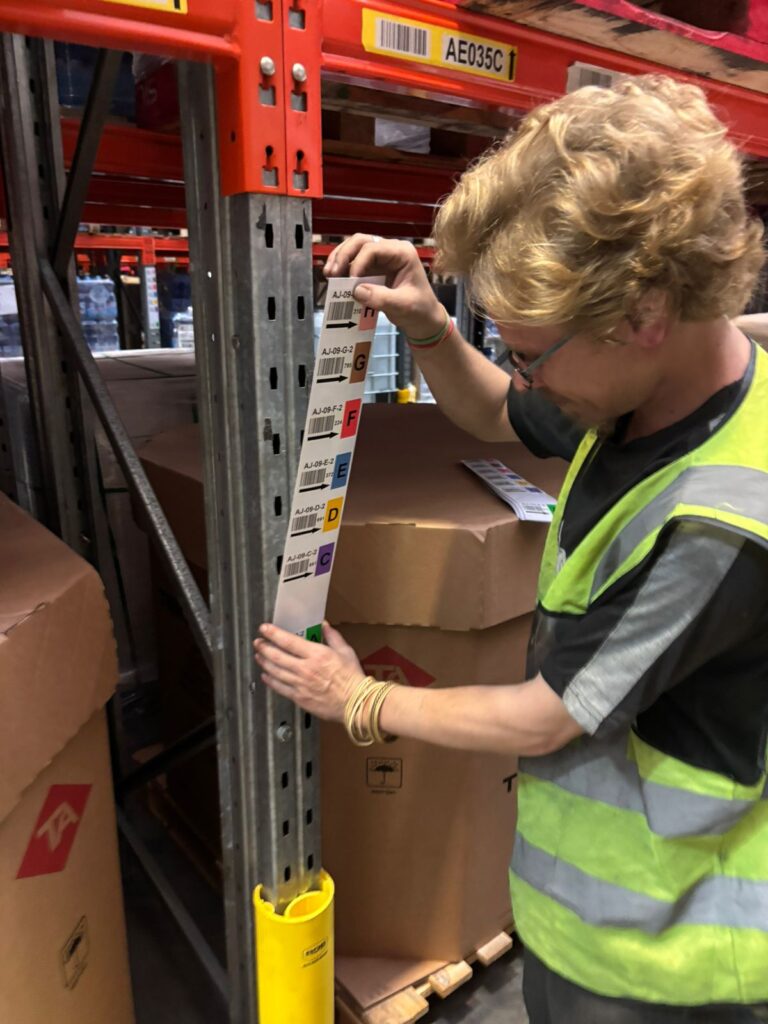
Recognising this, ProMHS has positioned labelling not as a product, but as part of a broader operational system. Each project begins with a deep understanding of the warehouse environment and how teams interact with it. From there, location layouts are mapped, materials are carefully selected, and labels are produced in-house to ensure consistency and quality. Installation is carried out by experienced teams who understand the importance of accuracy and minimal disruption to ongoing operations.
This approach was recently demonstrated in a large-scale project for a national logistics operation, where ProMHS was tasked with addressing growing inefficiencies in a high-pressure distribution environment. The facility had begun to feel the strain of increasing SKU volumes, inconsistent labelling, and reduced visibility across storage locations. Rather than applying a quick fix, the decision was made to completely redesign the labelling and location identification system.
Over the course of the project, more than 60,000 labels were designed, produced, and installed. At the same time, the racking organisation was restructured to create a clearer, more logical flow throughout the warehouse. The work was carried out within a live operational environment, requiring careful coordination to ensure that day-to-day activities could continue uninterrupted.
The impact was immediate. With improved visibility and a more structured layout, the facility experienced enhanced accuracy, smoother picking processes, and a more organised working environment. A full case study on the project is expected to be released in the new year.
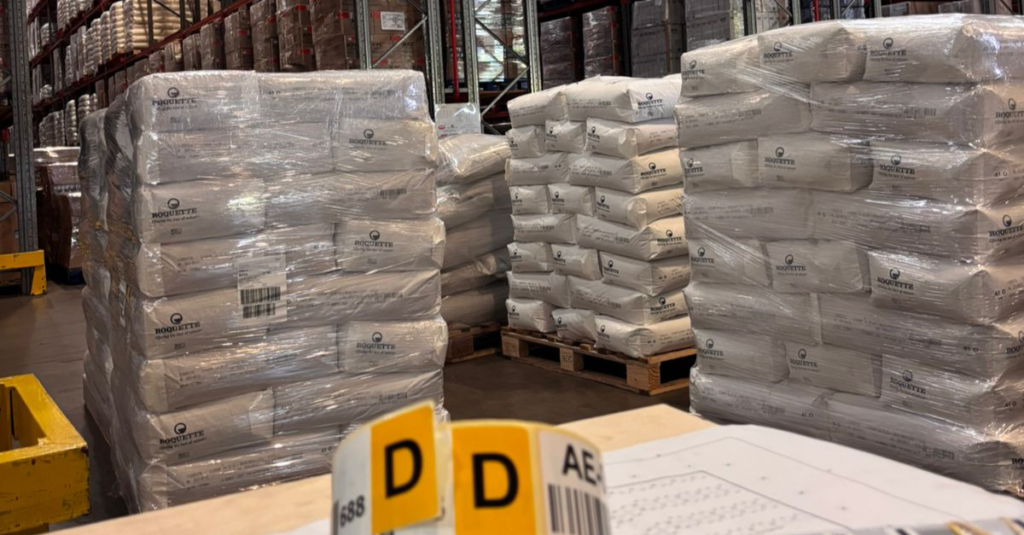
As warehouse operations continue to evolve, so too must the tools that support them. One example is the increasing use of wrap-around LPN (License Plate Number) labels, which provide dual barcode visibility on palletised loads. These labels improve scanning accuracy and allow for quicker identification from multiple angles, making them particularly effective in environments where pallet configurations vary.
While solutions like these are gaining traction, the underlying principle remains the same: successful labelling requires careful planning, the right materials, and precise execution.
“Labelling isn’t just about printing and sticking,” says Sherwood. “It’s about planning, precision, and execution. When it’s done properly, it becomes a silent enabler of efficiency across the entire warehouse.”
In an industry where margins are tight and performance is constantly under scrutiny, labelling is no longer a background detail. It is a strategic component of warehouse infrastructure — one that supports speed, accuracy, safety, and scalability.
Done correctly, it works quietly in the background, enabling operations to run at their best. Done poorly, it becomes a constant source of friction. And as more businesses begin to recognise its impact, warehouse labelling is finally stepping into the spotlight — not as a cost, but as a competitive advantage.