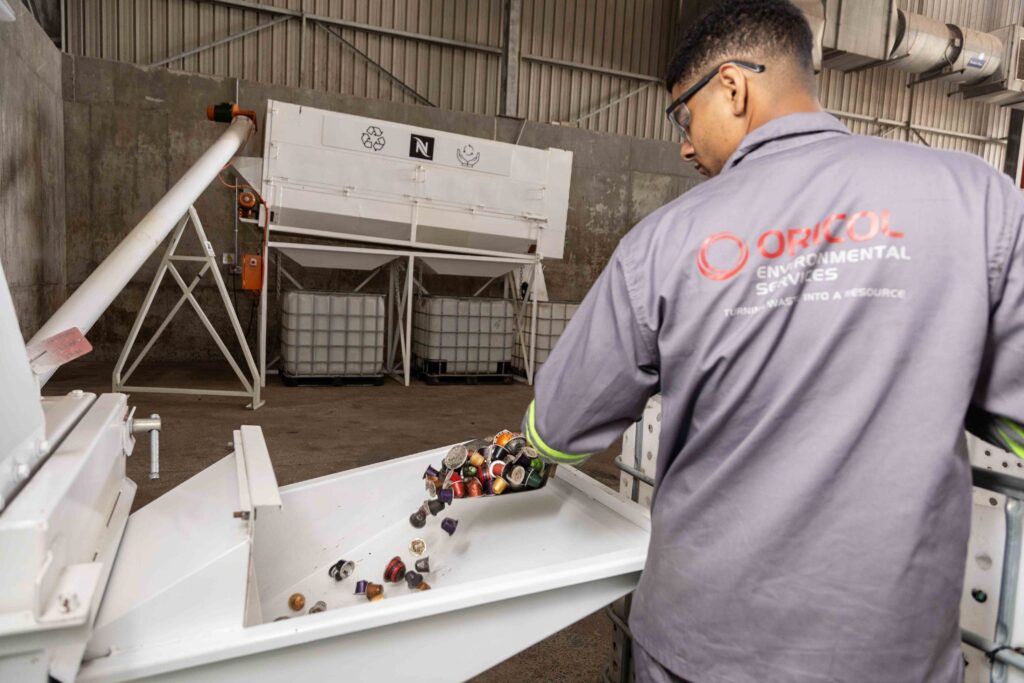
Nespresso uses aluminium for its coffee capsules because it preserves the freshness and aromas of high-quality coffee by providing a strong barrier against oxygen, light and humidity. At the same time, aluminium is continuously recyclable, making it an ideal material within a circular system where resources can be reused repeatedly.
“Nespresso approached Oricol Environmental Services approximately ten years ago to develop a viable non-landfill pathway for its capsule waste in South Africa. Aluminium has the advantage of being infinitely recyclable, so we immediately saw the benefits of creating second generation aluminium products,” says said Dirk de Wet, Chief Operating Officer at Oricol Environmental Services.
What emerged is a multi-partner system in which Nespresso provides the consumer-facing collection infrastructure, Oricol enables the materials recovery process, and consumers complete the loop by returning used pods through multiple convenient options – including booking a capsule collection when placing an order online or via the Nespresso app, handing capsules to a RAM courier during any delivery, or dropping them off at any Nespresso boutique using a recycling bag included with each purchase.
At Oricol’s processing facilities, a customised mechanical separation machine, developed specifically for this application, extracts aluminium from the used capsules. That aluminium enters a smelting process and is remanufactured into new products. The extracted coffee grounds are processed through a composting operation. A portion of the coffee grounds is also channelled to community food gardening programmes, where it serves as a valuable soil amendment product.
Critically, the aluminium being recovered already carries strong recycling credentials. These capsules are made using at least 80% recycled aluminium for Original, while most Vertuo capsules use at least 85%, meaning the material completing this circular loop has already been recovered and reused before.
“The circular model is directly aligned with South Africa’s escalating waste diversion priorities,” says de Wet. “The Draft National Waste Management Strategy 2026 sets a target of diverting 40% of collected waste from landfill within five years, rising to 60% within fifteen years. The strategy identifies metals recycling and organic waste composting as priority diversion mechanisms, and explicitly names packaging, including metallic packaging, among the waste streams earmarked for tightened producer responsibility compliance.”
The coffee pod recycling system is a practical proof point for what producer responsibility, purpose-built processing infrastructure, and consumer participation can enable: a viable circular economy for coffee pods. “What the broader sector stands to learn from this model is that complexity at the product level need not translate into an unrecoverable waste stream, provided the enabling infrastructure is built and the circular pathway is made accessible,” adds de Wet.