South Africa’s cold chain infrastructure has never been better equipped. Modern distribution centres run sophisticated refrigeration systems. Temperature loggers record readings around the clock. CCTV cameras cover every zone. RFID readers track pallets at the gate. The hardware investment has happened.
And yet cold chain failures keep occurring. Product leaves a facility within specification and arrives at the customer out of condition. An audit reveals a compliance gap that nobody on the floor knew about. A GDP certificate is queried because the supporting records are incomplete. A temperature excursion happened — but nobody knew until after the fact.
The problem is not the sensors. The problem is that the sensors are not talking to each other.
The Compliance Trap
Cold chain compliance in most South African distribution centres and 3PL operations is a retrospective activity. Temperature logs are reviewed at the end of a shift. Audit trails are assembled from paper records and manual entries. GDP documentation is compiled from multiple disconnected sources and reconciled by hand.
This approach has a fundamental flaw: by the time the data is reviewed, the opportunity to intervene has passed.
A cold store door that was left open for eight minutes at 14:23 is not a problem when the temperature log is checked the following morning. It is a problem at 14:25, when the zone temperature is rising and personnel are still present. The information exists. The sensors recorded it. But no system connected the door event, the temperature reading, and the camera feed into a single alert that someone on the floor could act on.
This is the visibility gap. And it is costing South African cold chain operators — in product losses, in compliance failures, in GDP audit exposure, and in the erosion of the verified track record that export markets and major retailers increasingly require.
Sensors Without Knowledge Are Useless
When I started building AVTIB, I spent time walking cold chain distribution centres and asking the same question: what does the floor manager actually see in real time?
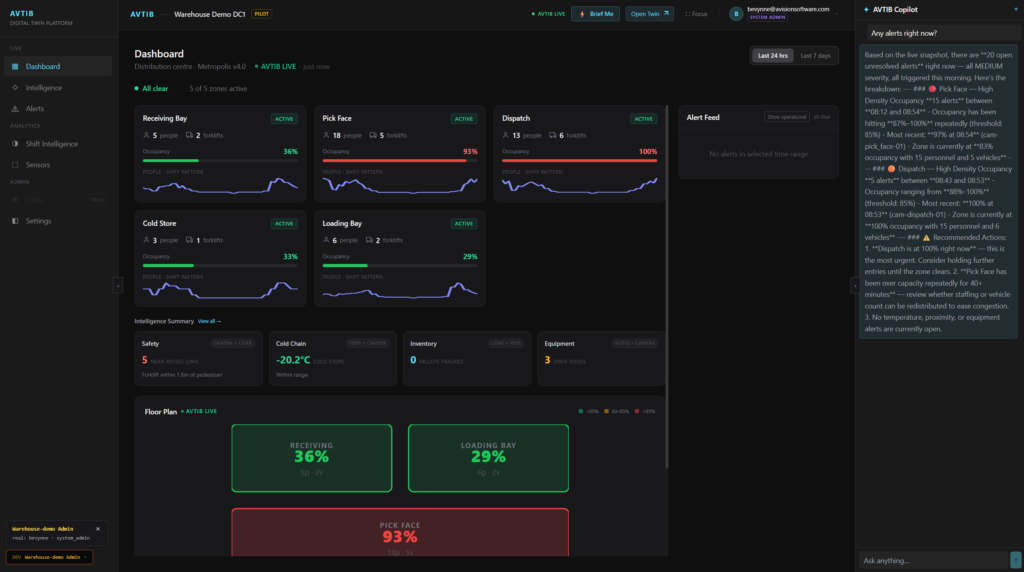
The answer, almost universally, was: very little. They see whatever their WMS tells them. They see a camera feed if they happen to open the right screen. They see a temperature reading if they check the logger. But they do not see a live, integrated picture of what is happening across the floor — which zones are under pressure, which doors have been open and for how long, which areas are approaching compliance thresholds.
The hardware to generate that picture already exists in most facilities. What is missing is the intelligence layer that connects it.
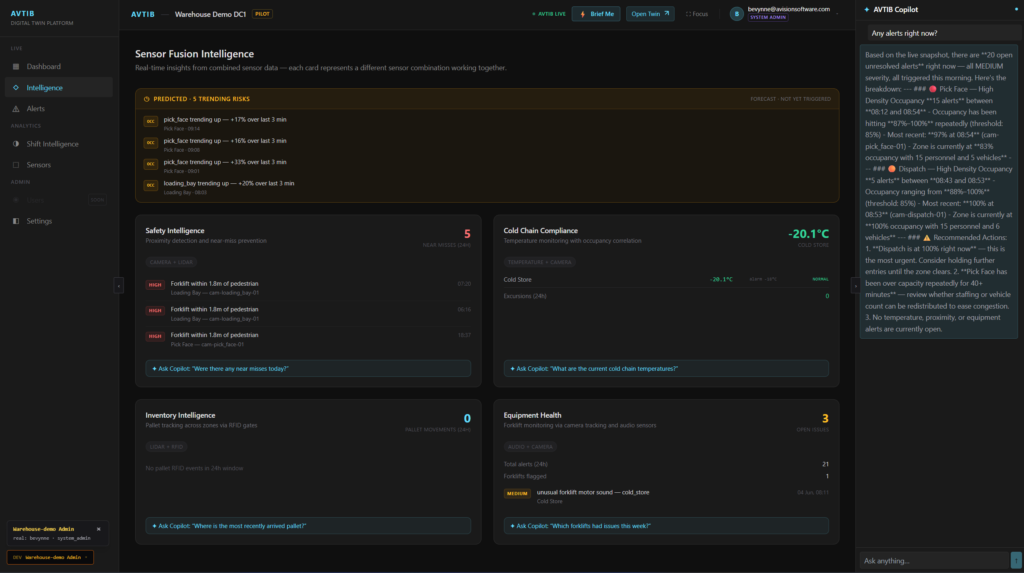
The design principle behind AVTIB is straightforward: sensors without knowledge are useless. A temperature sensor that detects a rise in a cold store is an alarm. A temperature sensor that detects a rise, correlated with a door open event and confirmed by a camera showing personnel present — that is an evidence chain. The same underlying data, connected, becomes operationally actionable and legally defensible.
This distinction matters more than it might first appear. Retailers and export markets are not just asking whether temperature was maintained. They are asking whether you can prove it, continuously, with a record that cannot be retrospectively altered. Manual audit trails cannot provide that assurance. Automated sensor fusion can.
What Real-Time Cold Chain Intelligence Looks Like in Practice
The sensor fusion combinations that matter most for cold chain operations are not complex. They follow directly from the failure modes that cost operators money.
Temperature and door events, correlated with camera confirmation, generate a GDP audit trail automatically. Every door open event is timestamped. Every person entering a controlled zone is detected. Every temperature delta is recorded against the entry event. The audit trail is continuous, tamper-evident, and available without any manual input from the operations team.
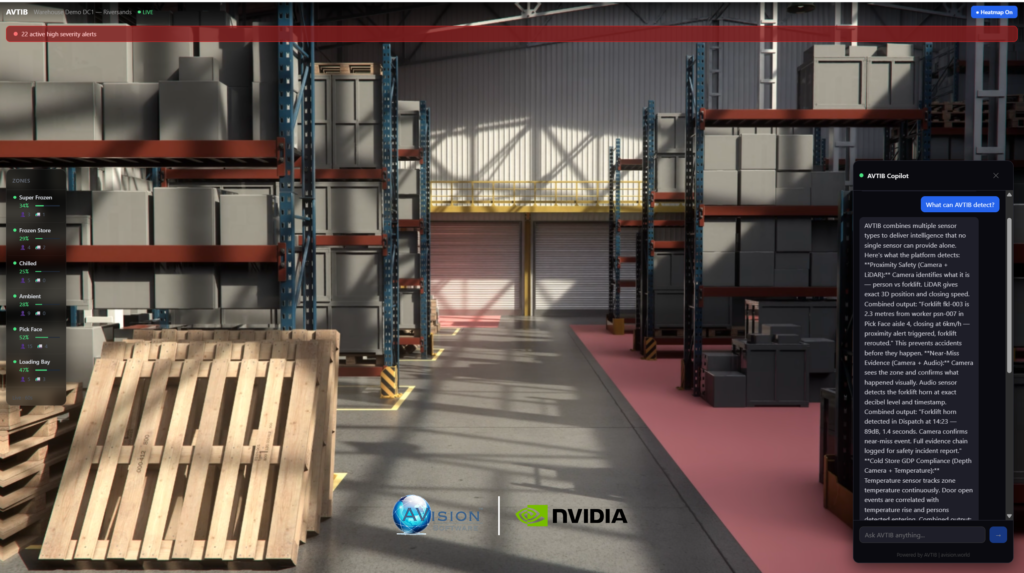
Camera and audio sensors, combined, create a near-miss evidence chain. A forklift horn in a dispatch zone, detected at a specific decibel level, correlated with a camera confirmation of the event — that is the kind of verified incident record that HSE compliance and insurance audits require.
LiDAR and RFID, combined, produce a live racking inventory picture at zone level. Not a daily stock count, but a continuous awareness of what is where — updated as pallets move.
None of these combinations require new hardware in most facilities. They require an intelligence layer that reads from existing sensors, correlates the data, and surfaces alerts and evidence chains in a dashboard that the operations team can act on.
The Shift That Is Coming
Cold chain operators in South Africa are facing a convergence of pressures that make the visibility gap increasingly expensive to ignore.
Export market requirements are tightening. Major retailers are strengthening their cold chain audit processes. The regulatory environment around GDP compliance and R638 is becoming more consistently enforced. And as the competitive landscape in South African cold chain logistics intensifies, operational efficiency and verified compliance are becoming differentiators, not just cost of entry.
The operators who will be best positioned in this environment are not those who invest in more sensors — most already have enough. They are the operators who connect the sensors they have into a live operational picture, build an automated compliance record that holds up to scrutiny, and use that record as a competitive asset with their clients.
The cold chain visibility problem is not a hardware problem. It is an intelligence problem. And in 2026, that problem is solvable.