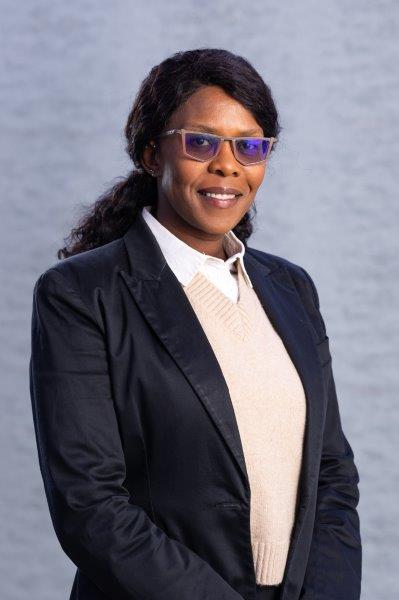
Lebo Mbethe, Group Executive at Reinhardt Transport Group, shares her experience within the logistics industry to show the strides being made by women in the sector.
South Africa’s logistics sector remains traditionally male-dominated, but women are increasingly making their mark across national operations. With women also occupying influential positions in transport policy, including the national Transport Minister, the industry is seeing a gradual shift in who shapes its future.
One such leader is Lebo Mbethe, Group Executive and Board Member at Reinhardt Transport Group. Her journey from owning a small trucking business to serving on the executive committee of a major Southern African logistics group shows the emerging opportunities for women – and the determination needed to seize them.
“What I find encouraging today is that seeing women in logistics no longer feels quite as unusual,” says Mbethe. “There are more women across the industry and, importantly, we’re seeing them move beyond traditional support functions into operations, commercial roles, and leadership.”
From five trucks to the boardroom
Born and raised in Witbank, now Emalahleni, Mbethe grew up in an entrepreneurial family, helping in her parents’ shops and businesses. After completing a BCom in Accounting at the University of Cape Town, she went on to complete an executive education programme through Oxford Princeton in London.
Her introduction to logistics came in 2006, when she established a small trucking business with five vehicles transporting coal from one of her brother’s mines to Eskom. Although the venture was challenging, it gave her an early understanding of the industry’s demands and the complexities of running a transport operation.
“I was a young woman trying to find my way in an industry that was overwhelmingly male,” she recalls. “I remember walking into meetings and operational environments and often being one of very few women in the room. You learnt quite quickly that you had to be willing to learn and confident enough to hold your own.”
Mbethe subsequently moved into fuel importing and distribution, founding Advent Oil in 2010, where she remains CEO. But it was in 2016 that her relationship with Reinhardt Transport Group began, when she approached them as a prospective fuel supplier. What started as a commercial relationship developed into an opportunity to join the business as a shareholder and executive.
She admits her first reaction was to decline: “I had already lost enough money with my five little trucks, and now these people wanted me to take a risk on 600 of them!”
After further discussions, she ultimately recognised the importance of working alongside an entrepreneurial leadership team: “Sometimes our first instinct is to say no because we’re allowing an old experience or an old fear to make a new decision for us. Sometimes you have to give an opportunity a chance, even when it scares you, because you really never know where it might lead.”
Why diverse leadership matters
As women gain greater representation in logistics, Mbethe believes they bring a wider range of experiences and perspectives into business decisions.
“When everyone around a table has similar backgrounds and experiences, it is very easy to approach problems in similar ways. Bringing women into those conversations naturally broadens the thinking,” she says.
For Mbethe, effective logistics leadership requires balancing commercial performance with an understanding of the people behind the numbers.
“Logistics can be incredibly operational — trucks, kilometres, fuel, margins, utilisation and efficiencies — but behind every one of those numbers are people. Drivers, operations teams, customers, suppliers and families. Understanding both sides of that equation matters.”
She believes organisations wanting women in senior positions need to create genuine opportunities for them to develop the experience. This means exposure to operational and commercial roles, offering training and mentorship, and entrusting women with responsibility for teams, budgets and business decisions. Senior leaders must also identify potential and actively support career progression.
“You can’t say you want more women in leadership if you’re not creating the opportunities to get there,” she says.
Building the next generation of women in logistics
Looking ahead, Mbethe wants to see more women entering logistics at junior operational level and developing the practical knowledge to progress into senior management. This requires moving past the perception that transport is simply about driving trucks and understanding the many functions that keep a fleet moving.
“If we want more women running transport operations in 10 or 15 years’ time, we need women gaining that experience today,” she says. “You can’t manufacture operational experience when someone reaches senior management — it has to be built over time.”
She encourages young women to be curious and put themselves forward for opportunities, even when they do not yet feel completely prepared.
“Nobody is born knowing how a truck works. You learn. Ask questions, spend time with the people who know more than you do and don’t be embarrassed about what you don’t know.”
For Mbethe, progress will be evident when women leading transport operations, owning logistics businesses, and sitting on executive committees no longer seem unusual. Ultimately, she believes the sector must focus on building a pipeline of talent throughout the industry.
“Companies must open the doors and create genuine pathways to leadership, but as women, when those doors open, we also have to be willing to walk through them, learn the business, and take on the responsibility that comes with leadership.
“Logistics is tough, fast-moving and sometimes unforgiving, but it is also an incredibly interesting industry. If you are willing to learn the ropes, work hard, and get your hands dirty, there’s no reason you shouldn’t eventually be the person running the operation!” she concludes.