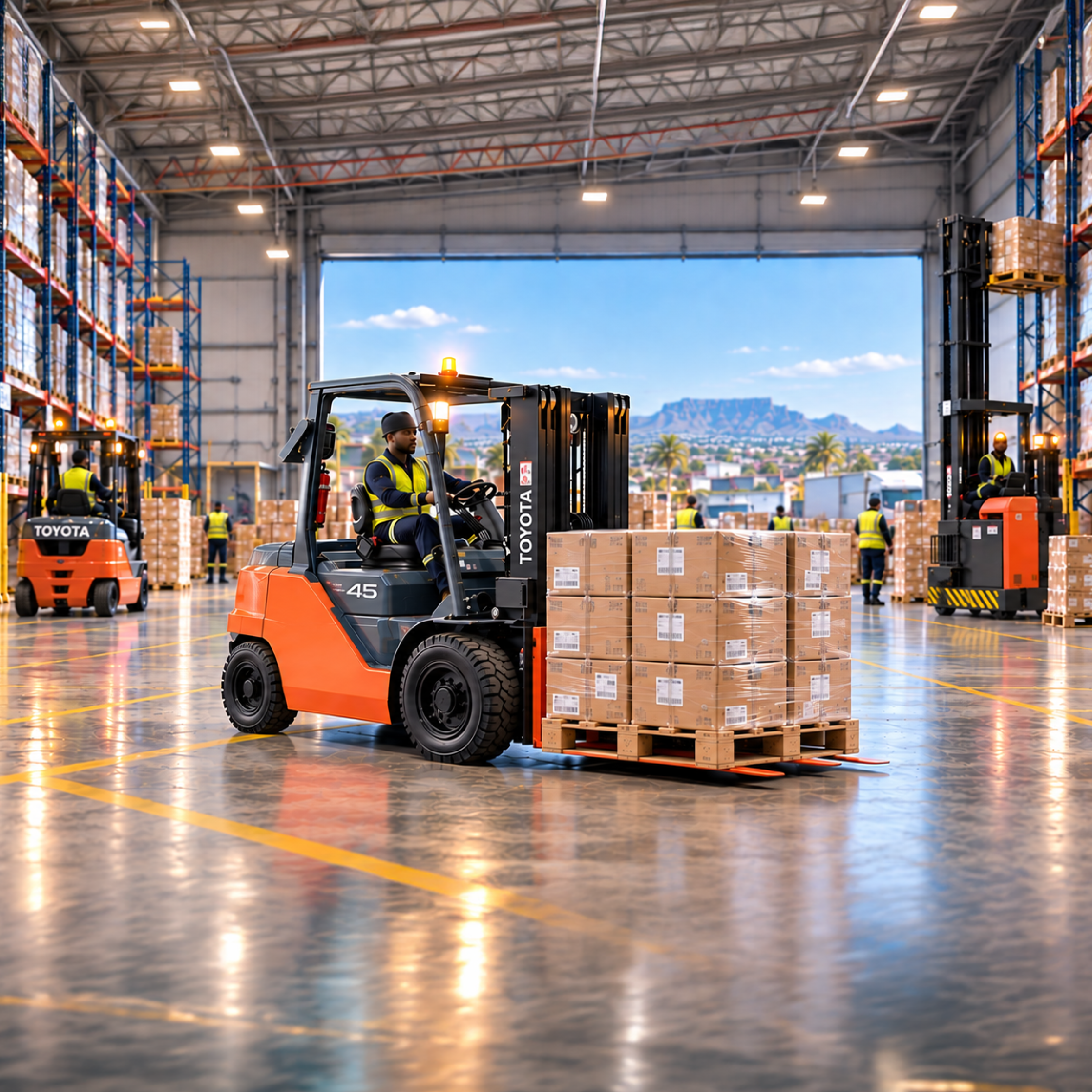
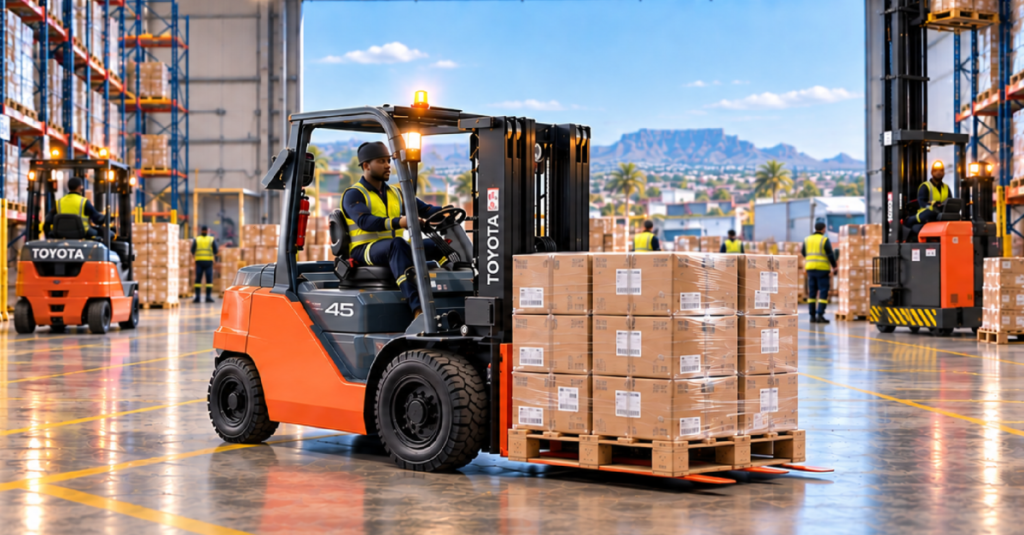
As Western Cape warehouses prepare for seasonal demand spikes, operations look for ways to move higher volumes of stock efficiently without taking on unnecessary long-term equipment costs. For retailers and other high-throughput operations, periods such as back-to-school, Easter, Mother’s Day, Father’s Day and Christmas can significantly increase warehouse activity.
CFAO Equipment National Technical Manager, Stephen Mostert, says having the right material handling equipment available during these peaks can help businesses maintain stock flow, improve productivity and reduce operational delays.
“During peak periods, a customer may suddenly need to move twice the number of pallets they would during normal operations. Their existing equipment is generally sized for day-to-day throughput, so short-term rental provides a practical way to add capacity when it is needed. They can then return those additional units once the peak has passed.”
Counter Balance Forklifts remain among the most sought-after machines, alongside reach trucks, pallet trucks, order pickers and other application-specific equipment. The choice depends on the warehouse environment and the work required. Reach trucks, for example, are increasingly important as warehouses make greater use of vertical space, while order pickers can support fast-moving retail and pharmaceutical operations.
Rental can also help operations avoid the cost of owning equipment that sits idle for much of the year. A fleet operating at only 10%, 20% or 30% utilisation can represent unnecessary capital and maintenance costs, whereas higher utilisation makes better use of the investment.
Seasonal industries such as fruit operations provide a clear example. They may require additional forklifts for only part of the year, returning them once the harvesting season ends. When the equipment is required again, it can be serviced, inspected and prepared for deployment.
Mostert says flexibility is critical because peaks do not always follow a single pattern. Customers may need additional equipment for one, three or five months. The ability to scale up quickly and then reduce the fleet afterwards helps them manage both productivity and overheads.”
Equipment selection is also increasingly influenced by running costs and sustainability. Electric forklifts, particularly lithium-ion models, are gaining ground as businesses look to reduce maintenance and operating costs, while diesel and other power options remain important for demanding applications.
With peak periods placing additional pressure on warehouse operators, equipment availability, skilled operators, safety and aftermarket support all contribute to maintaining uptime. For Western Cape businesses, peak readiness is not simply about having more equipment, it is about having the right equipment, for the right period and using it efficiently, while reducing total cost of ownership.