South African farmers are now preparing for the 2026/27 summer planting season just after fertiliser prices were reported in June to be roughly 50% higher than a year earlier. Adding to the pressure that farmers face, South Africa is anticipating a very hot summer season with lower rainfall due to El Niño. Ahead of World Food Day on 16 October, higher production costs and anticipated warmer, drier conditions connect environmental concerns with food affordability. Farmers depend on productive soils and sufficient water to sustain harvests, while households depend on food prices they can afford. Does the answer of all of this lie in our food waste?
This year’s theme, “Innovate today. Nourish tomorrow.”, highlights the contribution of science and innovation to food production. “While the cost of fertiliser is becoming out of reach for many farmers, especially small-scale community farmers, South Africa food waste stream is not in short supply. The composting technology is also readily available to convert food waste into high-grade compost at scale,” says Brian Küsel, Director of BiobiN South Africa.
Weather and input costs put pressure on farmers
The South African Weather Service’s outlook favours below-normal rainfall and above-normal temperatures across much of the country as El Niño influences the 2026/27 summer season. Lower rainfall can leave less water available for crops, while higher temperatures increase moisture loss from soil and plants. These conditions can affect planting decisions and crop yields. During the strong El Niño events of 2015/16, South Africa’s maize yields fell roughly 20% below trend.
The prospect of lower yields comes when farmers are already paying more to produce food. Adding to this pressure, conflicts within and between countries are contributing to rising fuel and fertiliser costs by disrupting energy supplies and international trade. These pressures increase the cost of running agricultural machinery, transporting produce and importing fertiliser.
Together, higher costs and reduced harvests can put pressure on food prices, affecting how much households can afford to buy.
Organic matter supports agricultural soils
A 2011 review in the South African Journal of Science found that South African soils generally contained low organic matter levels, although conditions varied considerably. Organic matter supports water infiltration and moisture retention, as well as soil organisms and nutrient availability. Maintaining it is particularly relevant when rainfall is limited.
“Farmers are paying more for inputs while also needing to maintain the condition of their soils,” says Küsel, “Compost should form part of a longer-term approach to soil management, alongside the crop’s nutrient requirements. Enhancing soils with compost results in better moisture retention and improved crop yields over time.”
CSIR research published in 2021 estimated that South Africa loses or wastes approximately 10.3 million tonnes of food annually. Preventing avoidable waste remains the priority, while suitable material that cannot be eaten should be processed into compost.
Businesses can close the loop on food waste
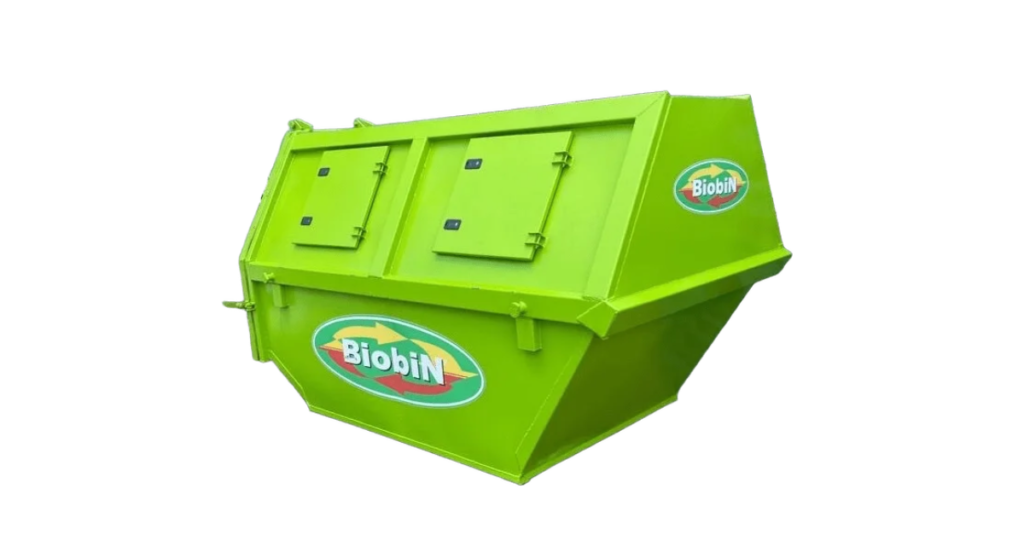
Hotels, restaurants, farms, food retailers and most commercial facilities that generate high-volumes of food and organic waste should use on-site in-vessel systems such as BiobiN to process this waste stream. Once properly matured, compost can be used in food gardens or supplied to farmers.
“A business generating food waste can establish a direct connection with a farmer who needs compost,” says Küsel. “That requires separating suitable material and making arrangements for processing and use, so that the organic matter returns to productive soil.”