
Globally, women make up just 26% of the circular economy workforce, the broad sector spanning waste management, recycling and resource recovery.¹ In South Africa, women are a visible presence at the informal collection and sorting end of the waste economy, but they remain scarce in its management ranks, reflecting a national pattern in which women hold roughly a third of all management positions.²
The Draft National Waste Management Strategy 2026 will push hard for a shift in the industry, setting skills targets that explicitly prioritise women entering the waste sector.³ At Oricol Environmental Services two of the functions that have driven the company’s growth, finance and business development, are run by women with more than four decades of sector experience between them.
Two functions, two decades in the sector
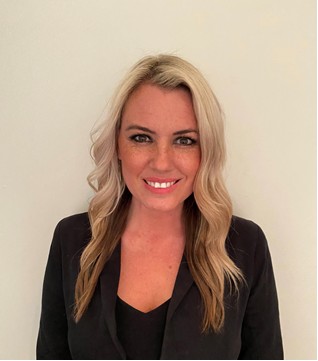
Tania Ferreira, Sales Manager, joined the industry more than 21 years ago from a sales and marketing background, with no intention of staying in waste. She has since grown from sales representative into management.
“I am incredibly proud of helping grow Oricol’s national footprint, from only three office staff in Port Elizabeth in 2005 to being part of our national expansion,” she says. “Building relationships, developing new business and seeing those efforts translate into sustainable growth has been one of the highlights of my career. What means just as much is helping clients implement waste diversion projects that reduce waste to landfill and create more sustainable solutions. Knowing our work contributes to a cleaner environment while supporting business growth gives real purpose to what we do.”
Jerusha Naidoo leads the finance function at Oricol’s head office, a role she has grown into since completing her accounting articles almost 20 years ago.
“What has kept me here is that the company is steeped in heritage and the values of our founder, while staying highly innovative and creative in the solutions we offer clients,” she says. “People are also surprised by what a waste company actually does. We turn waste into resource rather than sending it all to landfill.”
Changing how business sees waste
Both point to challenges that belong to the sector, not just their own roles. For Ferreira, the enduring one is perception. “One of the biggest challenges has been changing perceptions around waste. Many organisations still see it as something that simply needs to be removed, rather than an area where they can improve efficiency, reduce costs and contribute to sustainability,” she says. “One of the things I enjoy most is helping clients see waste differently. Instead of viewing it as a cost or a problem, we help them see it as a resource with value and an opportunity to make a positive environmental impact.”
For Naidoo, the challenge sits beneath the numbers. “My biggest challenge is how complex the business really is. In waste, finance means linking financial outputs to operational inputs, understanding how a single decision or the treatment pathway feeds through to the bottom line, with disposal costs, compliance and recovery all playing a part,” she says.
Where the opportunity lies
“Businesses are becoming far more aware of sustainability, circular economy principles and responsible environmental management. Waste is increasingly recognised as a valuable resource. I am particularly excited by innovation in recycling, renewable energy, resource recovery and waste-to-energy. There is enormous potential to recover more materials, reduce landfill dependence and create new economic opportunities, and I believe technology and data will keep transforming how we work,” says Ferreira.
For Naidoo, the scale itself is the opportunity. “This industry is so much bigger than people realise, if you think about how much waste is generated in South Africa alone,” she says. “We have just scratched the surface of what is possible, and now, with AI, we are lifting the ceiling.”
Advice for women entering the sector
“Never underestimate what you are capable of,” says Ferreira. “Waste management has traditionally been seen as male-dominated, but that is changing, and there is space for strong, capable women to lead, innovate and make a meaningful difference. Lead with integrity, stay humble, support those around you, and always look for ways to leave things better than you found them.”
Naidoo’s counsel is to learn the whole business. “Immerse yourself in as many departments as possible, understand how each part works, and start to put the picture together,” she says. “That is how you begin to see where the opportunities are.”
As the Draft NWMS 2026 works to widen the pipeline of women entering waste management, Ferreira and Naidoo are evidence of where that pipeline can lead, into the roles that decide how far a waste business can grow.