COLD-STORE EFFICIENCY STARTS WITH THE RIGHT REACH TRUCK
Working in sub-zero temperatures is challenging, especially in environments where temperatures can drop to a frigid -30°C. Across South Africa, many industrial equipment operators face these conditions daily in cold storage facilities serving the food and beverage, pharmaceutical, agricultural and chemical industries.
In these highly controlled environments, equipment must deliver safe, efficient and reliable performance while operating within space-constrained and temperature-sensitive settings. Equally important are the ergonomic and comfort-enhancing features that help operators remain productive, comfortable and safe throughout their shifts.
CFAO Equipment Product Manager: Warehousing & Automation, Louis Fourie, says cold stores generally have similar material handling requirements to ambient stores. “The colder temperatures, however, make conditions far more demanding for both the people and the equipment operating in these environments.”
He adds that cold store operating costs are in the region of two and a half times more than those of ambient stores. “This includes the increased labour cost because of the additional breaks needed by operators. Typically, operators are required to take a 10-minute break every hour, which amounts to a 17% increase in the labour cost.”
Because of the high investment required for cold storage facilities, maximising storage density is essential. This, in turn, requires equipment such as reach trucks that can operate in narrow aisles and access the highest storage locations while maintaining high residual capacities.
Choosing reach trucks that are specifically designed for cold store environments help reduce operating costs by minimising breakdowns, improving energy efficiency and increasing operational uptime. As they are purpose-built for freezer conditions, businesses spend less on repairs, replacement parts and operational delays.
Globally, reach trucks for frozen operations (as low as -30°C) represent about 10% of the market, while those for chilled operations (between zero and 5°C) represent at least 15% of the market. “The South African market reflects a similar trend,” notes Fourie. “In the retail sector, chilled operations support the cold chain for fresh produce, dairy products and other perishables, while frozen operations cater for frozen foods.”
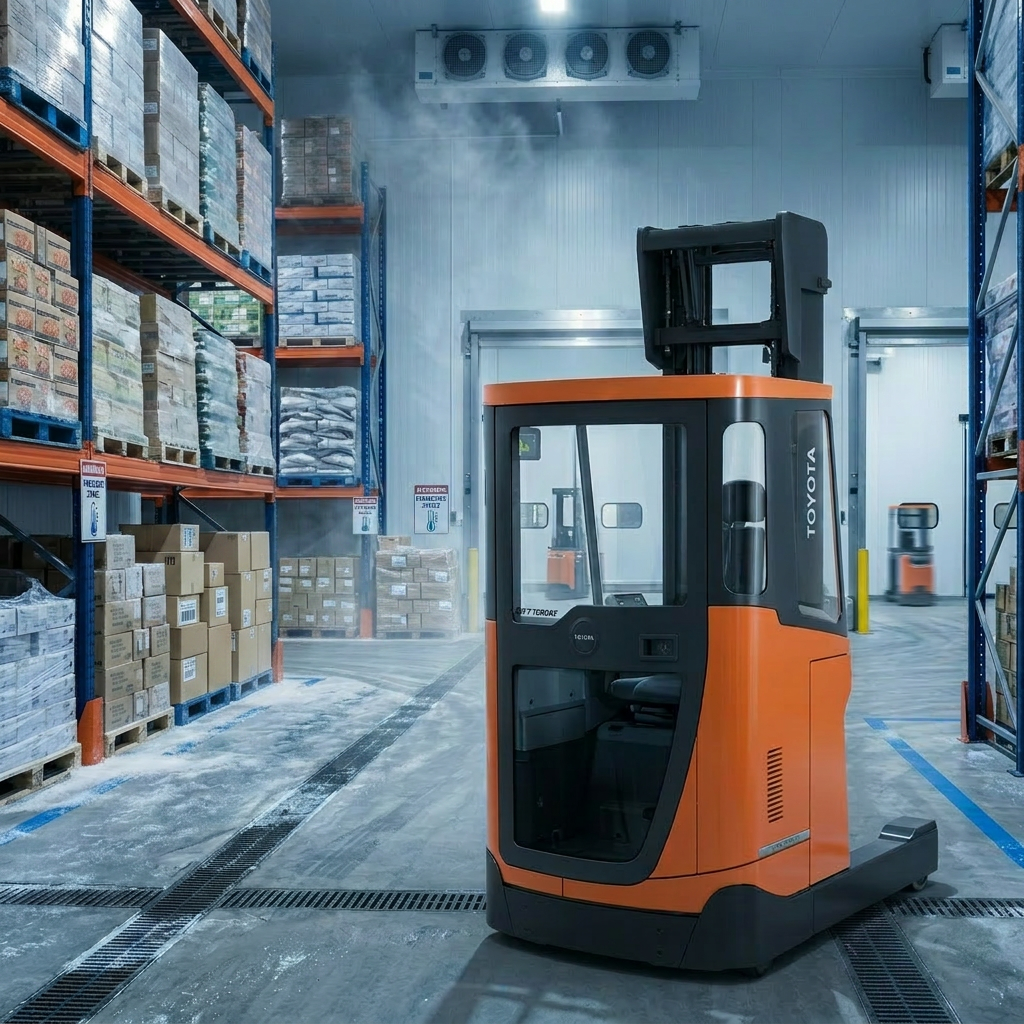
While the standard reach trucks offered by CFAO Equipment’s Toyota Material Handling division, can operate at temperatures down to -10°C, cold store protected trucks are specifically engineered for reliable performance in low-temperature environments.
Condensation is a common challenge for equipment operating in cold stores, particularly when moving between cold and ambient environments. Although it is recommended that reach trucks remain within the cold store during operation, this is not always feasible. For example, when using lead-acid batteries, charging must take place outside the cold store in higher ambient temperatures.
Fourie says the Toyota BT Reflex range incorporates numerous features to protect it in cold environments. “All switches and electrical components are designed for use in cold store; the hydraulic system uses a specialised oil to withstand the cold; and all welded areas on exposed structures, such as the mast, fork carriage and reach carriage, are double checked during manufacture and quality control.”
While reach trucks are available with an open or closed cabin, operators working in sub-zero temperatures benefit most from a heated, closed cabin. This enables them to work comfortably for longer periods, supporting higher productivity while reducing the risk of accidents.
In addition, a unique feature of the BT Reflex range is its tilting cabin, which is designed to enhance operator comfort and efficiency by tackling the physical strains – especially on the neck – of high-level stacking. Tilting the cabin back as the forks move up, creates a more natural viewing angle and better control over the load.
Fourie says with cold-chain operations dependent on consistency, speed and reliability, choosing the right reach truck is critical. “The right equipment helps ensure smooth warehouse operations, minimises disruptions, protects temperature-sensitive goods and improves overall efficiency.”