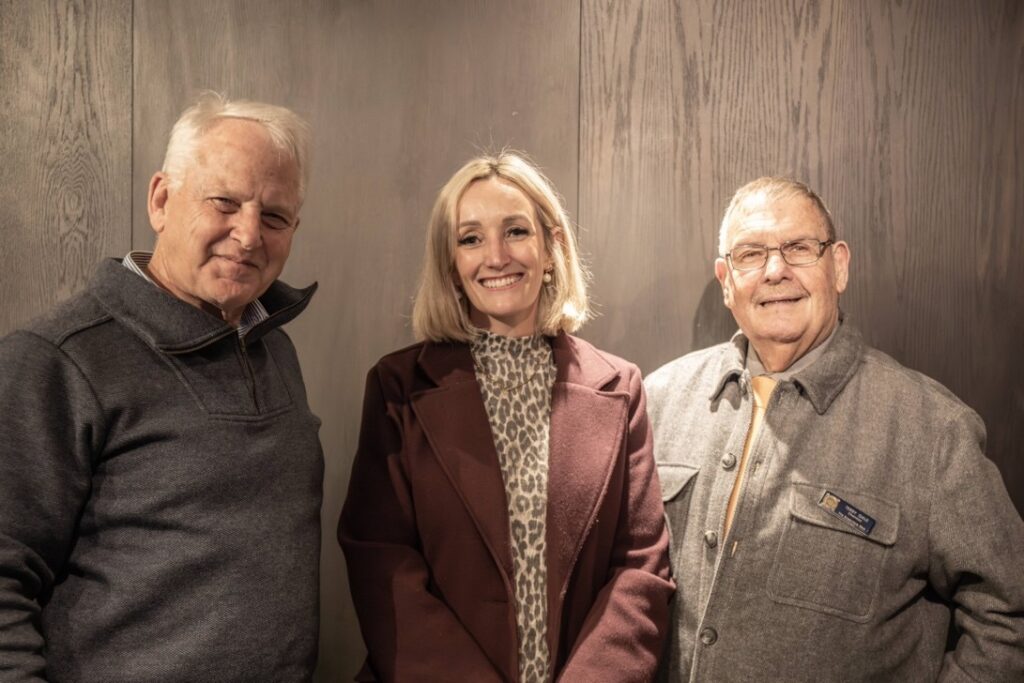

Improving the Western Cape’s logistics system will be essential if the province is to achieve its export ambitions and create thousands of new jobs, according to Ilse van Schalkwyk, Deputy Director-General in the Western Cape Department of Economic Development and Tourism.
Speaking to Exporters Western Cape members at The Rockefeller Hotel in Cape Town on 5 August, Van Schalkwyk outlined the province’s recently launched export strategy and the first phase of its developing maritime logistics strategy.
The Western Cape aims to grow its economy by between 4% and 6% by 2035, triple exports – including tourism – and bring 1 000 new exporters into the economy. Van Schalkwyk said the province also needed to diversify beyond its strong dependence on primary agricultural products by increasing manufactured and other value-added exports.
“Nobody needs to do us a favour. We need to be competitive,” she said. “That last decision by a buyer often comes down to price, but competitiveness is what allows you to go toe-to-toe in global markets.”
Logistics capacity would have to keep pace with private-sector investment and rising production. Van Schalkwyk said Port of Cape Town cargo had the potential to grow by about 4% a year, representing roughly 40 000 additional containers and supporting around 5 000 new jobs annually. Failing to accommodate that growth would constrain job creation.
The Western Cape’s maritime logistics strategy therefore looks beyond the Port of Cape Town to the Western Region’s three commercial ports – Cape Town, Saldanha Bay and Mossel Bay. Each port should build on its strengths while forming part of a coordinated system. Cape Town’s role includes multi-cargo handling, a specialist cold port, cruise activity and ship repair; Saldanha Bay offers deep-water bulk capacity, energy-storage opportunities and potential for large-scale ship repair; and Mossel Bay has opportunities in liquid fuels and cruise tourism.
“You cannot focus only on the Port of Cape Town. You have to look at the system,” Van Schalkwyk said. This would require long-term infrastructure planning, investment and decisions about where particular functions should be located.
The strategy identifies four strategic enablers. The first is better integration and synchronisation across the logistics ecosystem, including cargo handovers between road and rail. The second is digital platform development, including a port community system and the use of predictive analytics to prevent bottlenecks. The remaining priorities are balancing port performance and cargo flows and strengthening resilience during disruptions.
Digital integration was another priority. While several useful standalone initiatives already existed, Van Schalkwyk said the province needed an independent port community system that brought information together for exporters, cold stores, depots, logistics operators, customs and port users.
Private-sector participation was also important, said Van Schalkwyk who welcomed Transnet’s move to seek a partner to design, finance and operate Berths B-D at the Port of Cape Town under a 25-year concession. “It is not simply about saying the private sector does it better. It is about bringing in partners that can deliver faster, at a lower cost and with improved capability,” she said.
She added that the province was engaging the World Bank over the Container Port Performance Index and would provide access to its broader real-time vessel data. The aim was not to dismiss the rankings, but to recognise shortcomings, improve coordination and reduce vessel call times.
Exporters Western Cape chairman Terry Gale said efficient logistics had become inseparable from export growth. “Our exporters are ready to grow, invest and enter new markets, but the logistics system must be able to support that ambition. The commitment to a three-port system, better rail links and shared digital information is encouraging. The priority now must be implementation, with government, Transnet and the private sector working to clear bottlenecks and deliver measurable improvements,” he said.