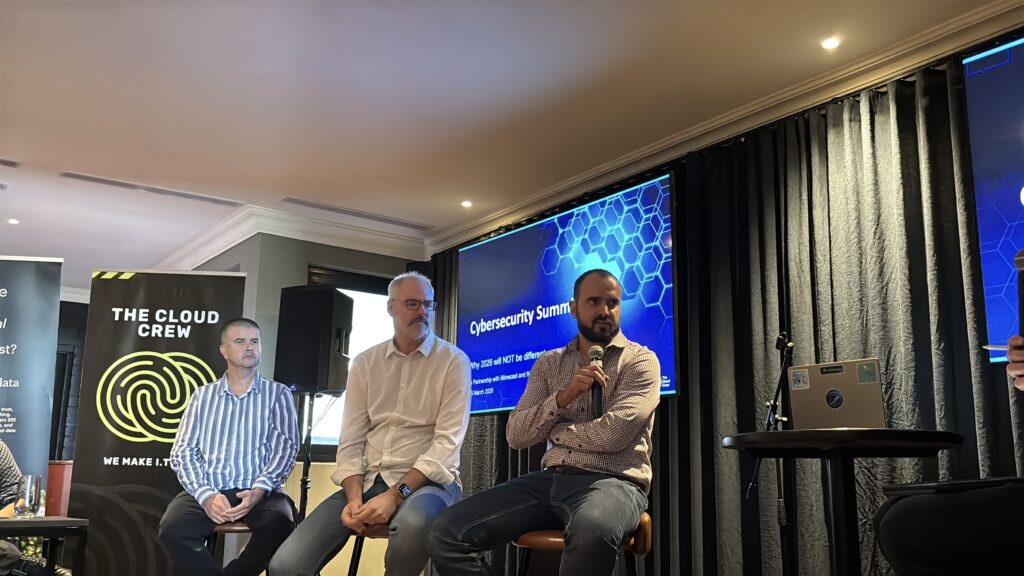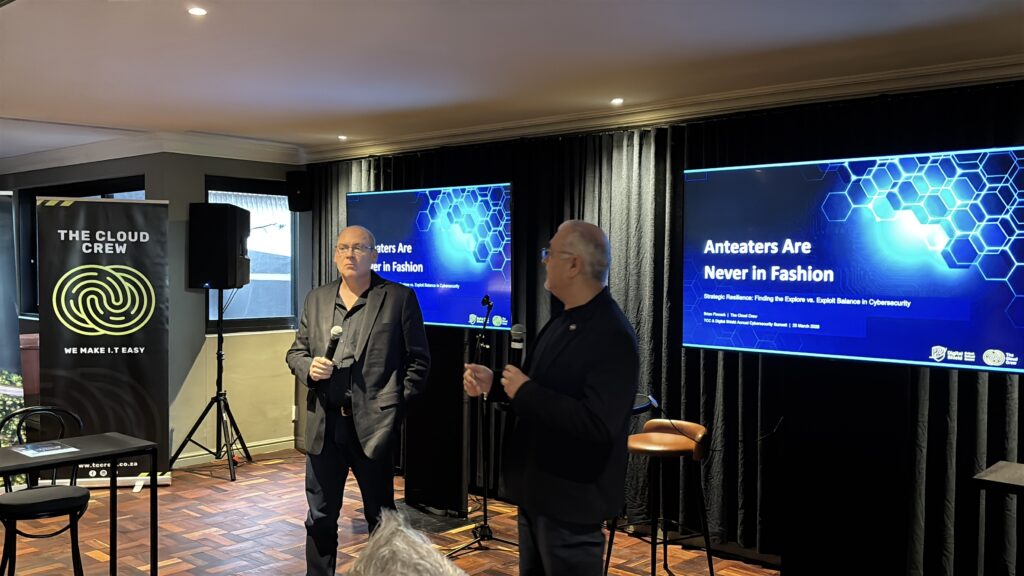
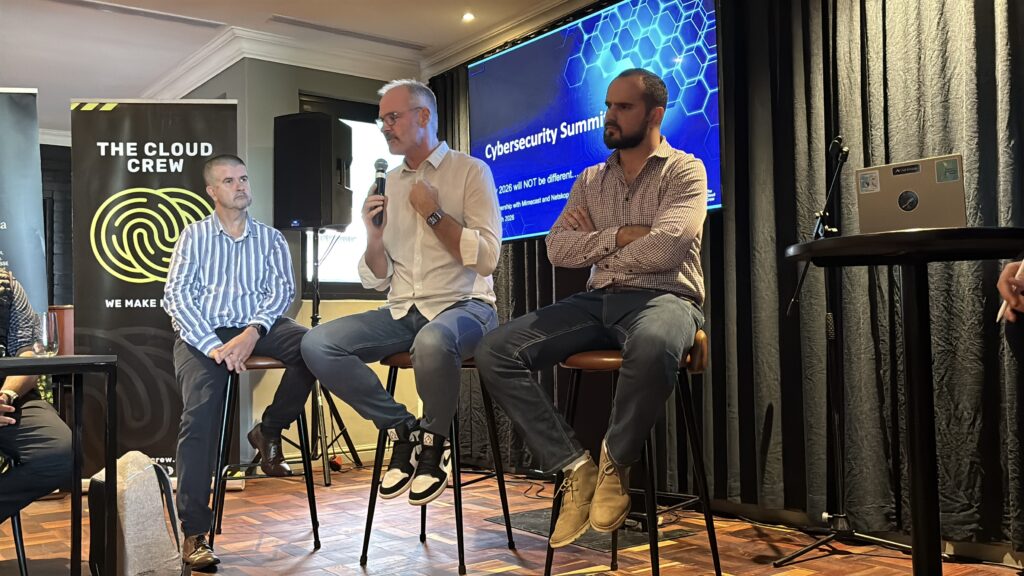
Cybersecurity Summit 2026 highlighted the need for stronger data governance, continuous monitoring, human risk awareness, and more disciplined security operations.
South African businesses need to focus more deliberately on cyber resilience as AI adoption, cloud complexity, human risk, and limited internal resources reshape the threat environment.
That was one of the central messages from Cybersecurity Summit 2026, hosted by The Cloud Crew and DigitalShield in partnership with Mimecast and Netskope. The summit brought together cybersecurity specialists, technology providers, and business leaders to examine why many of the pressures facing security teams in 2026 are not entirely new, but are becoming harder to manage with traditional approaches.
The summit’s theme, “Why 2026 will not be different,” highlighted a familiar problem. Many organisations have invested in security tools, while visibility, governance, response readiness, and operational discipline still lag behind the risks they face.
For The Cloud Crew, the discussion reinforced the need for businesses to treat cybersecurity as part of the broader technology environment they depend on every day.
“Businesses are under pressure from every direction,” says Brian Pinnock, Go-to-Market Executive of The Cloud Crew. “They are adopting AI, using more cloud platforms, supporting distributed teams, and managing more suppliers and systems than before. The danger is that cybersecurity becomes a collection of disconnected tools and checklists. Resilience comes from understanding the environment, knowing what matters most, and making sure the right controls, people, and processes are working together.”
A key theme at the summit was the need to balance security fundamentals with adaptability. The Cloud Crew’s presentation argued that organisations cannot rely only on static best practices. Cloud adoption, AI, remote work, and supply chain complexity mean that what counts as a basic security control keeps changing. Businesses still need to patch, monitor, control access, and manage known risks, but they also need to scan the horizon for emerging attack methods and changing exposure.
The AI discussion added another layer to the problem. Netskope’s presentation focused on aligning AI adoption with data security, including understanding where AI can operate, who has access to sensitive information, how data is classified, and how governance can be proven continuously.
“AI is putting a spotlight on weaknesses that were already there,” says Timothy Smith at DigitalShield. “The immediate concern is employee use of new tools, but the deeper exposure often sits in the data environment itself, where sensitive information may already be overexposed, poorly classified, or accessible to people and systems that do not need it. That makes continuous monitoring, detection, and response more important, especially for organisations that do not have a fully staffed internal security operations function.”
DigitalShield says many businesses still underestimate the operational requirement behind cybersecurity. Tools can produce alerts, but alerts do not reduce risk unless they are monitored, triaged, investigated, and escalated properly.
“Cybersecurity has to work when the business is busy, when teams are stretched, and when incidents happen outside normal office hours. That requires visibility, process, and response capability. It is not enough to know that something might be wrong. Organisations need to know who is looking, what happens next, and how quickly they can contain the issue,” says Cath Stodel, Co-Founder of TCC and DS.
The summit also explored the human layer of security. Mimecast’s presentation highlighted how work, collaboration, data, and the security perimeter have changed, while human behaviour remains a central part of cyber risk. That makes awareness, behaviour, identity, and collaboration security part of the same operating challenge, rather than separate issues.
According to The Cloud Crew and DigitalShield, cybersecurity resilience in 2026 will depend on understanding risk, reducing unnecessary exposure, improving governance, monitoring continuously, and preparing properly for incidents before they become business disruptions.
“Businesses do not need fear-based cybersecurity,” says Pinnock. “They need a realistic view of where they are exposed, what they can manage internally, and where specialist support is needed. That is how cybersecurity becomes operational resilience rather than another technology burden.”